SEO for Home Services: Win More Local Jobs in 2026

# SEO for Home Services: Win More Local Jobs in 2026
SEO for home services is the practice of optimizing your online presence to rank prominently in local search results, attract qualified leads, and convert those visitors into booked jobs. Done right, it builds an owned marketing asset that generates leads at near-zero marginal cost over time. Contractors who combine organic search with paid channels like Google Local Services Ads generate 42% more total leads than those relying on a single channel. That number alone tells you why a multi-layered approach is the standard, not the exception.
What are the essential components of SEO for home service contractors?
Good SEO strategy integrates service pages, Google profile proof, reviews, and lead capture pointing to booked jobs. Rankings are a byproduct of that system, not the goal. Here are the core components every contractor must have in place.
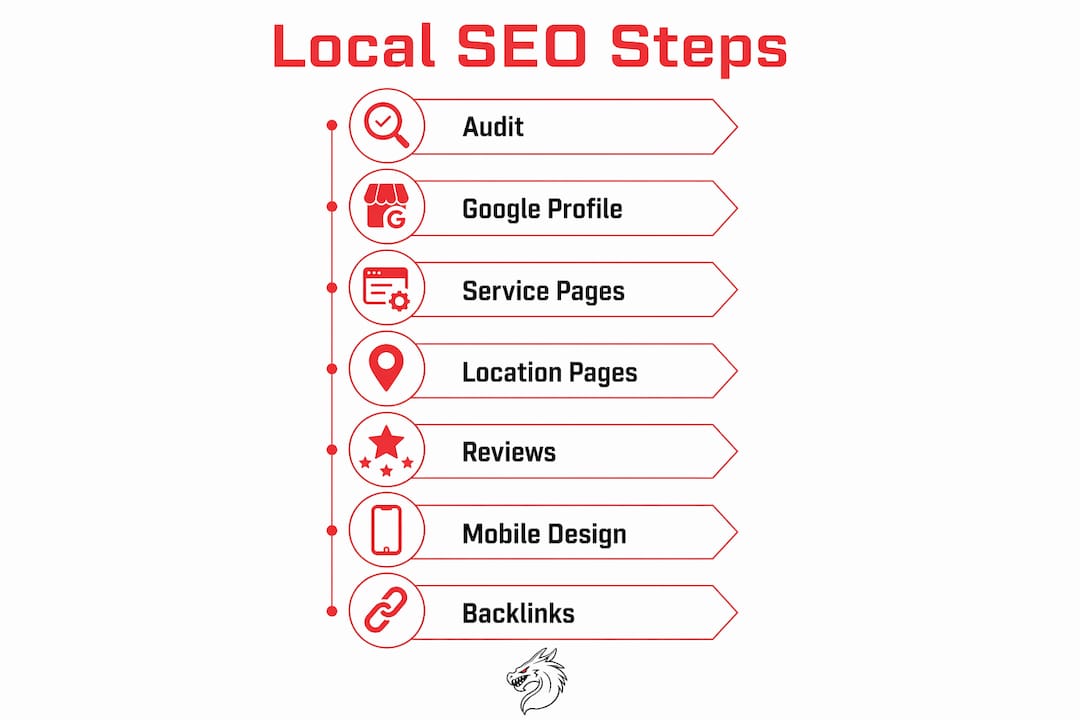
1. Google Business Profile
Your Google Business Profile (GBP) is the single most powerful local SEO asset you control. GBP completeness correlates directly with map pack placements, and 75% of local searches happen on mobile devices. Fill out every field: services, hours, photos, description, and service areas. Respond to every review, positive or negative, within 48 hours.

Pro Tip: Add at least 10 real job photos to your GBP monthly. Google rewards active profiles with higher visibility in the local map pack.
2. Dedicated service pages
Each core service you offer needs its own page. A plumber serving three cities should have separate pages for water heater repair, drain cleaning, and leak detection. Each page must include local proof: neighborhood references, photos from real jobs, customer reviews, and a clear call to action. Generic pages that cover five services in 200 words do not rank.
3. Location pages
If you serve multiple cities or zip codes, build a dedicated location page for each one. These pages signal to Google exactly where you work. Include the city name in the title tag, H1, and body copy. Add locally relevant details like nearby landmarks or neighborhoods to make the content feel authentic rather than templated.
4. Structured data and schema markup
Schema markup tells search engines what your business does, where it operates, and how customers can contact you. LocalBusiness schema, Service schema, and Review schema all help Google display rich results like star ratings and phone numbers directly in search. This is a technical step, but the payoff in click-through rate is measurable.
5. NAP consistency and citations
Your Name, Address, and Phone number must match exactly across every directory: Google, Yelp, Angi, the Better Business Bureau, and any trade association listings. Consistent NAP citations build trust signals that search engines use to verify your business is legitimate. One mismatched phone number across 40 listings creates confusion and weakens your authority.
6. Reviews and reputation management
Reviews are both a ranking signal and a conversion tool. Contractors with a steady stream of recent, detailed reviews outrank those with older or fewer reviews. Build a system to request reviews after every completed job, whether through a text message, email, or a QR code on your invoice.
7. Mobile-first website design
Your website must load fast and convert on a phone. Average conversion rates sit at only 2%–5%, which means a slow or confusing site wastes the majority of your hard-earned traffic. A conversion-optimized website with clear CTAs, click-to-call buttons, and fast load times is not optional. It is the floor.
8. Local backlinks and citations
Authority comes from real business mentions. Supplier pages, local chamber of commerce listings, trade association directories, and community sponsorships all build the local link profile that tells Google you are a real, trusted business in your area.
How can contractors combine SEO with Google Local Services Ads to maximize leads?
Organic SEO and Google Local Services Ads (LSAs) serve different functions, and using both together is the highest-return strategy available to contractors right now.
Here is how each channel works and why they complement each other:
- —LSAs deliver fast, verified leads. Google LSAs convert at a 31% lead-to-booked-job rate and typically go live within 2–5 weeks of setup. You pay per verified lead, not per click, which eliminates wasted ad spend on irrelevant traffic.
- —SEO builds long-term lead flow. Organic rankings take 6–12 months to gain real traction, but once established, they generate leads at near-zero marginal cost. You own the asset. No one can outbid you for your own ranking.
- —Combined, the results are measurably better. Contractors using both channels achieve 40% lower cost per acquisition compared to single-channel operators. That savings compounds every month as SEO matures.
- —LSAs do not build brand equity. Unlike a well-ranked website, LSA clicks do not contribute to remarketing audiences or long-term brand recognition. This is why SEO must run in parallel, not as an afterthought.
- —Sequence matters. Launch LSAs immediately to generate cash flow. Build your SEO infrastructure in the same first month. By month 6, organic leads begin supplementing paid volume. By month 12, you can dial LSA spend up or down based on capacity, not desperation.
Pro Tip: Use call tracking numbers on your website and a separate tracking number for LSAs. This lets you measure cost per booked job by channel and shift budget toward what actually fills your schedule.
Knowing why local search matters for your business makes it easier to commit to both channels with confidence. Contractors who treat LSAs and SEO as competing expenses miss the point. They are two gears in the same machine.
What are common SEO mistakes home service contractors should avoid?
Most contractors who struggle with local search are making the same fixable errors. Recognizing them is the first step to correcting them.
- —Over-expanding service areas. Google favors verifiable, smaller service footprints over broad, unrealistic ones. Claiming you serve 40 cities when you realistically cover 8 dilutes your ranking signals everywhere.
- —Incomplete or inconsistent GBP. A profile missing photos, service descriptions, or accurate hours sends weak signals to Google and weak trust signals to potential customers.
- —Duplicate or thin content on service pages. Copying the same paragraph across five location pages and swapping the city name is a known ranking penalty trigger. Each page needs unique, locally relevant content.
- —Ignoring reviews. Failing to request new reviews or respond to existing ones signals inactivity. Google interprets an unresponsive business as a less trustworthy one.
- —Mismatched NAP citations. A phone number listed as "(805) 555-0100" in one directory and "805.555.0100" in another creates conflicting data that weakens your local authority.
- —Neglecting mobile usability and site speed. A site that takes more than 3 seconds to load on a phone loses a significant portion of visitors before they ever see your phone number.
- —No call tracking or source attribution. If you cannot tell which leads came from Google organic, LSAs, or Yelp, you cannot make informed decisions about where to invest.
- —Disconnected systems. Traffic without follow-up is revenue lost. Integrating your website, GBP, reviews, and lead response into one system is what separates contractors who grow from those who plateau.
Pro Tip: Audit your top 10 directory listings every quarter. Search your business name on Google and check that the Name, Address, and Phone number match your GBP exactly on every result that appears.
How to build and execute a local SEO plan for your home service business
A phased, weekly workflow beats a one-time overhaul every time. Here is a practical sequence that contractors can execute without an agency.
- 1.Run a baseline audit. Review your homepage, top service pages, GBP, citation consistency, review count, and call tracking setup. Document what exists and what is missing before making any changes.
- 2.Pick 3–5 core services to prioritize. Focus your first wave of content and optimization on your most profitable services. A roofing contractor might start with roof replacement, storm damage repair, and gutter installation before expanding.
- 3.Rewrite or build service pages. Each page needs a locally specific title tag, an H1 with the service and city name, real job photos, a customer review or two, a brief FAQ section, pricing context, and a clear CTA above the fold.
- 4.Update your Google Business Profile. Add accurate services, upload fresh photos, write a keyword-rich business description, and respond to every existing review. Then set a recurring reminder to add new photos and posts weekly.
- 5.Publish local content regularly. A short post about a recent job in a specific neighborhood, a seasonal tip for homeowners, or an FAQ about a common repair builds topical authority over time. Frequency matters more than length.
- 6.Build local citations and backlinks. Submit your business to trade directories, ask suppliers for a link on their "trusted contractors" page, and pursue local sponsorships that include a website mention.
- 7.Monitor the metrics that matter. Track calls by source, form submissions, booked estimates, and close rates. Rankings are a leading indicator. Booked jobs are the actual goal.
The table below maps each phase to its primary outcome.
| Phase | Action | Primary Outcome |
|---|---|---|
| Audit | Review all existing pages, GBP, and citations | Identify gaps before spending time or money |
| Content | Build or rewrite service and location pages | Rank for high-intent local searches |
| Profile | Update and maintain Google Business Profile | Improve map pack visibility |
| Authority | Build citations and earn local backlinks | Strengthen domain trust signals |
| Tracking | Set up call tracking and source attribution | Measure cost per booked job by channel |
Optimizing your Google Business Profile is the single highest-leverage action in this entire sequence. Get that right first, then build outward.
Key Takeaways
Contractors who combine organic local SEO with Google Local Services Ads, backed by a conversion-focused website and consistent review management, generate more leads at a lower cost than any single-channel approach.
| Point | Details |
|---|---|
| GBP is your top local asset | A fully optimized Google Business Profile drives map pack placements and mobile leads. |
| Combine SEO with LSAs | Using both channels generates 42% more leads and cuts acquisition cost by 40%. |
| Avoid thin and duplicate content | Each service and location page needs unique, locally specific content to rank. |
| Track booked jobs, not just rankings | Call tracking and source attribution reveal which channels actually fill your schedule. |
| Sequence your strategy | Launch LSAs first for cash flow, then build SEO infrastructure in parallel for long-term growth. |
What I've learned after years of watching contractors get SEO wrong
The biggest misconception I see contractors carry into SEO is treating it as a rankings project. They want to see their name at the top of Google, and they measure success by position. That thinking costs them money.
Rankings are a means to an end. The end is a booked job. I have seen contractors rank on page one for competitive keywords and still lose leads because their website had no click-to-call button above the fold, their GBP had no photos, and no one responded to inquiries for 6 hours. Traffic without conversion infrastructure is just a vanity metric.
The contractors who win are the ones who treat SEO as a full system. They optimize the profile, build the pages, collect the reviews, track the calls, and follow up fast. They also do not wait for SEO to mature before generating revenue. They run LSAs from day one, use that cash flow to fund the SEO build-out, and then gradually reduce paid dependency as organic rankings take hold.
The other thing I would push back on is the idea that local SEO is complicated. The fundamentals are not. Consistent NAP, complete GBP, real service pages, and genuine reviews will outperform most competitors in most markets. The contractors who overthink it and delay execution lose ground to the ones who just start.
— Damian
How Vaultio helps contractors rank, capture leads, and book more jobs
Vaultio is built specifically for home service contractors who want to own their local market without wasting months figuring out SEO on their own.
Vaultio manages the full system: local SEO, Google Local Services Ads, and conversion-focused web design that turns visitors into calls. Contractors in markets like Goleta and Santa Maria use Vaultio to reach customers the moment they search, and to capture every lead before a competitor does. Every plan is backed by a 30-day money-back guarantee. If you are ready to stop guessing and start booking 10–15 more jobs per month, Vaultio is where you start.
FAQ
What is SEO for home services?
SEO for home services is the process of optimizing your website, Google Business Profile, and online citations to rank prominently in local search results and attract qualified leads. The goal is converting those visitors into booked jobs, not just generating traffic.
How long does local SEO take to show results?
Local SEO typically requires 6–12 months to generate significant organic lead volume. Contractors should run Google Local Services Ads in parallel during that period to maintain steady cash flow while SEO builds momentum.
What is the best local SEO strategy for contractors in 2026?
The best local SEO strategy combines a fully optimized Google Business Profile, dedicated service and location pages with unique local content, consistent NAP citations, active review management, and local backlinks. Pairing this with Google LSAs produces the highest total lead volume.
How do Google Local Services Ads differ from regular Google Ads?
Google Local Services Ads charge per verified lead rather than per click, and they display a Google Guarantee badge that increases trust. They go live in 2–5 weeks and convert at a 31% lead-to-booked-job rate, making them faster and more predictable than traditional pay-per-click campaigns.
Why do contractors with good rankings still lose leads?
Good rankings bring traffic, but poor conversion elements lose it. A site without click-to-call buttons, slow load times, or no review social proof will convert at the low end of the 2%–5% average range. Ranking and converting are two separate problems that both require attention.
Recommended
- —Local SEO for HVAC Companies: Dominate 'Near Me' Searches | Vaultio
- —Google Ads for Home Service Contractors | PPC Management for Plumbers, HVAC & More | Vaultio
- —Home Service Marketing Blog | Strategies, Tips & Tactics | Vaultio
- —Local SEO That Works Everywhere | Google Maps + ChatGPT Recommendations | Vaultio
Ready to Implement This?
We'll build your complete lead generation system in 72 hours. No contracts. 30-day money-back guarantee.