Trust Signals in B2B Lead Capture: What Converts in 2026
# Trust Signals in B2B Lead Capture: What Converts in 2026
Trust signals cut perceived risk at the exact moment a prospect decides whether to hand over their contact information, and that reduction directly lifts form completions and demo requests. The mechanism is not mysterious: buyers facing an unfamiliar vendor default to caution, and specific, verifiable proof, like a named client result or a live review count, overrides that caution faster than any headline claim can. Wharton's research on social proof found that 84% of shoppers check online reviews for local businesses before committing, and B2B buyers run the same mental check before filling out a form.
Three moves you can make this week:
- —Place one specific proof point in the hero. A client name, a metric, or a Trustpilot star count works better than a vague "trusted by hundreds" line.
- —Add a commitment reducer above your CTA button. "No contract required" or "Response in under 5 minutes" removes the fear that clicking costs more than a click.
- —Put privacy microcopy next to every email field. "We never sell your data" directly beside the input reduces the single most common point of form abandonment.
Key Takeaways
Trust signals reduce a B2B buyer's perceived risk at the exact decision point, and specific, well-placed proof consistently outperforms generic claims or badge clutter.
| Point | Details |
|---|---|
| Specificity beats volume | One named testimonial with a real result outperforms a wall of generic five-star ratings. |
| Placement matters as much as content | Signals adjacent to the CTA resolve hesitation; footer placement does almost nothing. |
| Technical signals count too | HTTPS, page speed, and mobile performance shape trust even when visitors don't consciously notice them. |
| Test with real attribution windows | B2B sales cycles need 14 to 30 day test windows, not next-day conclusions. |
| Authenticity is non-negotiable | Fake reviews or inflated activity counts destroy more trust than they ever build. |
| Vaultio ties signals to response speed | Vaultio pairs conversion-focused page design with fast AI lead response to turn trust into booked jobs. |
Table of Contents
- —What Is the Role of Trust Signals in Lead Capture?
- —Why Do Trust Signals Matter More in B2B Lead Capture?
- —Which Trust Signals Actually Move B2B Lead Capture?
- —Where Should You Place Trust Signals on Landing Pages and Forms?
- —How Do Technical Trust Signals Affect Perceived Safety?
- —How Do You Measure the Impact of Trust Signals?
- —What Are the Best Practices and Common Mistakes With Trust Signals?
- —What Does a Two-Week Trust-Signal Sprint Look Like?
- —What Happened When a Home-Service Contractor Fixed Its Trust Signals?
- —Which Trust Signal Should You Test First This Quarter?
- —How Vaultio Helps You Put Trust Signals to Work
- —Frequently Asked Questions
- —Sources
What Is the Role of Trust Signals in Lead Capture?
A trust signal is any specific, verifiable piece of evidence that reduces a prospect's perceived risk in a transaction. That is different from branding, which shapes how a company wants to be perceived. A tagline says "we're reliable." A trust signal proves it with a number, a name, or a third-party record a buyer can check independently.
The taxonomy that matters for B2B lead capture breaks into seven working categories:
- —Social proof: star ratings, written testimonials, and review counts from platforms like Trustpilot or Google Reviews.
- —Third-party validation: industry certifications, accreditation seals, and directory listings such as the Better Business Bureau (BBB).
- —Client proof: logo strips from recognizable accounts and case studies that name a specific outcome.
- —Process and transparency: copy that tells a prospect exactly what happens after they submit a form.
- —Security and privacy signals: HTTPS indicators, SOC 2 mentions, and plain-language privacy microcopy.
- —UX and performance signals: page load speed, mobile responsiveness, and clean form design.
- —Real-time and activity signals: live chat availability, recent submission counts, or response-time promises.
Some of these are things a visitor consciously notices, like a badge or a testimonial. Others work below conscious awareness. A page that loads in under two seconds and renders cleanly on a phone reads as more credible even when the visitor never articulates why. Wikipedia's overview of trust signals traces this back to research on how third-party seals and rating systems change buyer confidence, and the same principle extends to invisible technical cues.
Why Do Trust Signals Matter More in B2B Lead Capture?
B2B buying decisions carry more friction than consumer purchases by design. Sales cycles stretch across weeks or months. Multiple people, often a technical evaluator, a budget holder, and an end user, weigh in before a single lead becomes a signed contract. The financial stakes are higher, and the cost of choosing wrong is higher too, so every trust signal on a landing page is doing work against a much thicker wall of hesitation than a consumer checkout page ever faces.
Different signals do different jobs depending on where a buyer sits in that journey:
- —Hero section: establishes basic legitimacy. This is where a recognizable client logo or a review count answers "is this a real company?"
- —Mid-page evaluation area: answers "does this fit my situation?" Case studies with specific numbers work best here.
- —CTA zone: resolves commitment risk. This is where a privacy line or a "cancel anytime" note removes the final hesitation before a click.
Stakeholders also weigh signals differently. A technical buyer scans for security certifications and integration proof. An economic buyer looks for case studies with hard numbers, revenue impact, cost savings, time saved. An end user, the person who will actually use the tool day to day, responds more to specific testimonials describing daily friction points solved.
There's a discoverability angle too. Google's E-E-A-T framework (Experience, Expertise, Authoritativeness, Trustworthiness) influences how a page ranks organically, and the same trust signals that convert visitors also tend to strengthen how search engines evaluate a page's credibility. For paid traffic, landing page trust affects Quality Score directly, which means a page with weak trust signals pays more per click for the same volume of traffic. Trust isn't just a conversion lever. It's a cost lever.
Which Trust Signals Actually Move B2B Lead Capture?
Not every trust signal carries equal weight, and treating them as interchangeable wastes limited page real estate. Here's a ranked list based on how reliably each one moves the needle for B2B forms and landing pages, from highest to lowest impact.
- 1.Video testimonials. A real person on camera, naming their company and describing a specific result, is the hardest signal to fake and the hardest to ignore. Use it on demo-request pages where the buyer needs to picture themselves as the next success story.
2. Case studies with metrics. "Reduced onboarding time by 40% in 90 days" beats "great experience working with them" every time. Place these mid-page, right where a skeptical evaluator is deciding whether your solution fits their situation.
3. Live reviews widget. An embedded, dynamically updating feed from Trustpilot or Google Reviews signals that feedback is current and unfiltered, not cherry-picked once and frozen in time.
4. Founder or team photo with a short bio near the CTA. A face and a name humanize the transaction right at the point of highest hesitation. This works especially well for smaller vendors competing against faceless enterprise incumbents.
5. Industry certifications. Relevant accreditations or a BBB listing matter most on pricing pages, where the buyer is doing a final risk check before committing budget.
6. Specific-result text testimonials. A quote naming a role, a company, and a number outperforms an anonymous five-star rating with no context.
7. Client logo strip. Logos only work if the audience recognizes at least some of them. An unrecognizable logo wall reads as filler, not proof.
8. Press mentions. A single "as featured in" line from a credible outlet adds legitimacy but rarely drives conversion on its own, unless it's a recognizable trade publication.
9. Security and payment badges. These matter most on forms that request sensitive information, and matter far less on a simple newsletter signup.
10. Real-time activity signals. "3 companies requested a demo this week" adds urgency, but only when the number is real. This ranks lowest because it's the easiest signal to fake and the fastest one to destroy trust once a visitor suspects it isn't.
Pro Tip: Specificity beats volume every time. A single testimonial with a named person, a real company, a quantified outcome, and a date will outperform a wall of five generic five-star ratings, because specificity is exactly what a skeptical buyer's brain is scanning for.
Mailchimp is a useful reference point here: its own marketing pages lean heavily on named customer logos and specific use-case examples rather than generic praise, which is precisely the pattern that transfers well to B2B lead-capture pages in other industries.
Where Should You Place Trust Signals on Landing Pages and Forms?
Three placement rules explain most of the variance in how well trust signals perform. Get these right and the specific signal you choose matters less than you'd think.
Rule one: above-the-fold visibility. If a visitor has to scroll to find your first proof point, you've already lost some of them. At least one credibility signal, a logo, a rating, a client count, needs to be visible without any interaction.
Rule two: adjacency to the CTA. A trust signal sitting in the footer does nothing for the person hovering over your submit button right now. Placement research from Levri shows that commitment reducers work only when they sit directly next to the action they're meant to de-risk, not somewhere else on the page.
Rule three: proximity to the specific field causing hesitation. If your form asks for a phone number, a short line explaining why you need it and how it'll be used, placed right beside that field, reduces abandonment more than a generic trust badge anywhere else on the page.
Run through this checklist page section by page section:
- —Hero: one legitimacy signal, a logo, a rating, a recognizable client name.
- —Evaluation area: a case study or specific testimonial that matches the buyer's likely use case.
- —CTA zone: a commitment reducer directly beside or beneath the button.
- —Form fields: microcopy addressing the specific hesitation each field creates, especially email and phone.
- —Thank-you page: a confirmation of next steps and a response-time promise.
- —Email follow-ups: a repeated proof point that reinforces the decision the lead just made.
Mobile screens punish clutter. Prioritize one or two high-impact signals that appear without scrolling, typically privacy microcopy beside the email field and a single social proof element in the header. A row of five security badges crammed above a mobile form looks noisy and actually reads as less trustworthy than one clean, well-chosen signal. Keep the highest-priority action inside the thumb zone, the lower third of the screen, since that's where a phone user's hand naturally rests.
How Do Technical Trust Signals Affect Perceived Safety?
Some of the most persuasive trust signals never appear as a badge or a testimonial. They live in the back end, and prospects register them as a feeling of "this is safe" without consciously identifying why.
- —HTTPS and TLS indicators: the padlock icon in a browser bar is table stakes now, but its absence is an immediate red flag.
- —Privacy and compliance statements: brief mentions of GDPR or SOC 2 practices near a form reassure buyers evaluating vendor risk.
- —Page speed: a slow-loading form reads as an unmaintained, lower-quality operation, regardless of how good the offer actually is.
- —Mobile performance: a form that misbehaves on a phone erodes trust instantly, since most B2B research now happens on mobile at some point in the journey.
- —Form validation and anti-spam design: clean error handling signals a well-built product; a broken submit button undermines every other trust signal on the page.
Improving landing page trust quality also reduces paid-media cost per click by improving the landing page experience score that ad platforms use to set pricing. A faster, more trustworthy page doesn't just convert better. It costs less to reach.
Data point: landing pages with stronger trust signals see measurably lower bounce rates, which directly feeds into lower CPCs on paid channels, according to WSI's analysis of trust signals and Quality Score.
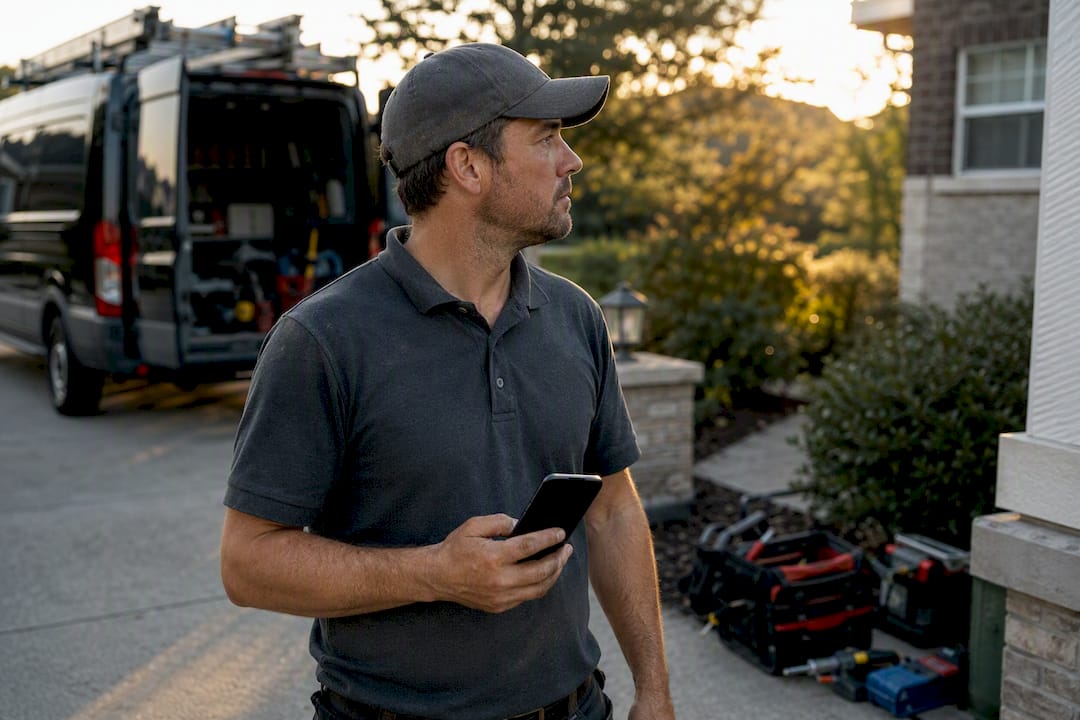
Test every one of these on a real phone, not just a resized browser window, and ideally with someone who matches your actual buyer persona rather than someone on your own team who already trusts the brand.
How Do You Measure the Impact of Trust Signals?
Trust signals are testable, and treating them as a design preference rather than a measurable lever is a mistake. Track these metrics before and after any change:
- —Form completion rate: the core metric, but not the only one.
- —Micro-conversions: CTA clicks, field-level abandon rate, scroll depth to the proof section.
- —Time-to-first-response: how fast your team follows up after submission, which itself becomes a trust signal for the next lead.
- —Demo-book rate and qualified-lead rate: completion means nothing if the leads aren't sales-ready.
- —Cost per acquisition: critical for paid channels, since trust signal changes often move CPC alongside conversion rate.
To test properly:
- 1.Run a control version against a signal-present variant, changing one trust element at a time.
- 2.Accept that B2B traffic volumes are usually lower than ecommerce, so plan for a longer test window, often 14 to 30 days, rather than expecting statistical significance in days.
- 3.Set your attribution window to match your sales cycle. A gated whitepaper download might need a 14-day window; a demo request tied to a six-figure contract often needs 30 days or more.
- 4.Watch qualified-lead rate in your CRM, not just raw form submissions. A change that increases volume but drops lead quality is not a win.
Before launching any test, confirm your analytics events are firing correctly, your UTM parameters are consistent across variants, and you have session recordings set up to watch how real visitors interact with the new signal. A test without clean tracking produces a number you can't trust, which defeats the entire point.
What Are the Best Practices and Common Mistakes With Trust Signals?
Good trust signals share a few habits. Be specific: name the client, state the number, date the result. Place signals next to the decision they're meant to influence, not wherever there's empty space. Favor real-time or recently updated proof over static claims that could be years old. Keep a refresh schedule so case studies and client logos never look stale.
The mistakes are just as consistent across companies that get this wrong:
- —Fake or incentivized reviews, which regulators and platforms are scrutinizing more aggressively every year.
- —Burying your strongest proof point in the footer, where almost no one scrolls to see it.
- —Cramming five badges onto a mobile form that only has room for one.
- —Using stock-photo testimonials with names that sound generic and faces that don't match any real customer.
Watch for these red flags in your own trust-signal inventory:
- —A "trusted by" logo strip full of names your audience wouldn't recognize.
- —Testimonial dates that don't line up with your company's actual timeline.
- —Team photos that look inconsistent in style, suggesting some are stock images.
- —Any signal, once questioned, that makes a visitor feel slightly misled rather than reassured.
Trustpilot's own research on inauthentic reviews makes the stakes plain: as consumers grow more sophisticated at spotting manufactured trust, platforms and regulators are moving faster to police fake reviews, and companies caught using them lose more credibility than they ever gained.
Governance matters here as much as design. Keep a living inventory of every trust signal on your site, note its source, and schedule a quarterly audit to catch anything stale or unverifiable before a prospect does.
What Does a Two-Week Trust-Signal Sprint Look Like?
- 1.Audit current signals (1 day). List every trust element on your top lead-capture pages and flag anything vague, outdated, or unverifiable.
- 2.Pick your highest-traffic page to test (same day). Focus effort where volume already exists so your test reaches significance faster.
- 3.Capture one specific testimonial or short video (3 to 5 days). Prioritize a named client with a quantified result over a polished but generic quote.
- 4.Add a commitment reducer next to your CTA (2 days). Keep the copy short: one line, no jargon.
- 5.Add privacy microcopy beside your email field (same day, low lift).
- 6.Run the A/B test for 14 to 30 days, depending on your typical sales cycle length.
Assign clear owners: marketing drafts copy, design handles placement, engineering implements the test, and sales confirms lead quality on the back end. A simple shared doc naming who owns each step prevents the sprint from stalling at the handoff.
What Happened When a Home-Service Contractor Fixed Its Trust Signals?
A home-service contracting client came to Vaultio with a lead-capture page generating steady traffic but a form completion rate well below what the traffic volume should have produced. The page had no visible client proof above the fold and buried its only case study in a footer link almost nobody clicked. The single biggest change: moving one specific, dated testimonial with a named customer and a quantified result directly beside the CTA button, paired with a short response-time promise ("we respond within minutes, not days").
Before and after the change:
- —Baseline: low form completion relative to traffic, with high abandonment right at the phone-number field.
- —After placement change: form completion rate improved, and lead quality in the CRM showed a noticeably higher rate of booked jobs from the same traffic volume.
- —Implementation: tested as a straightforward control-versus-variant split, tracked through CRM attribution over a full sales-cycle window rather than judged on early submission counts alone.
The mechanism matched what the placement research predicts: a specific, adjacent trust signal removed hesitation right where it was occurring, not somewhere else on the page where it wouldn't be seen at the moment of decision. This pattern is consistent with the documented 10 to 15 extra booked jobs per month that Vaultio clients see once lead-response speed and page-level trust signals are both addressed together. Neither fix alone produces the full result. The two compound.
Which Trust Signal Should You Test First This Quarter?
If your team can only run one trust-signal test this quarter, test the one closest to your actual CTA, not the one that's easiest to design. Most teams default to adding a logo strip or a certification badge because it's a quick design task. That's usually the wrong priority. The signal sitting furthest from the moment of decision does the least work, no matter how impressive it looks in isolation.
Three things I'd prioritize, in order: first, a specific testimonial or case study placed directly beside your primary CTA, since that's where hesitation peaks. Second, escalate to engineering only once you've confirmed the copy and placement change actually moves the number. Don't ask for a full page rebuild before you've validated the smaller fix. Third, lean on press mentions or earned media only after your on-page signals are solid. Earned media adds a layer of credibility, but it can't compensate for a page that's already leaking trust at the form.

One more thing worth saying plainly: a fabricated testimonial or an inflated review count might lift a number in the short term, but the long-term cost, both reputational and regulatory, is never worth it.
How Vaultio Helps You Put Trust Signals to Work
Vaultio builds the trust-signal infrastructure most contractors never get around to fixing themselves, then backs it with lead response fast enough that the trust you've built doesn't go to waste. That's the gap between knowing what converts and actually having someone implement, test, and maintain it while you run your business.
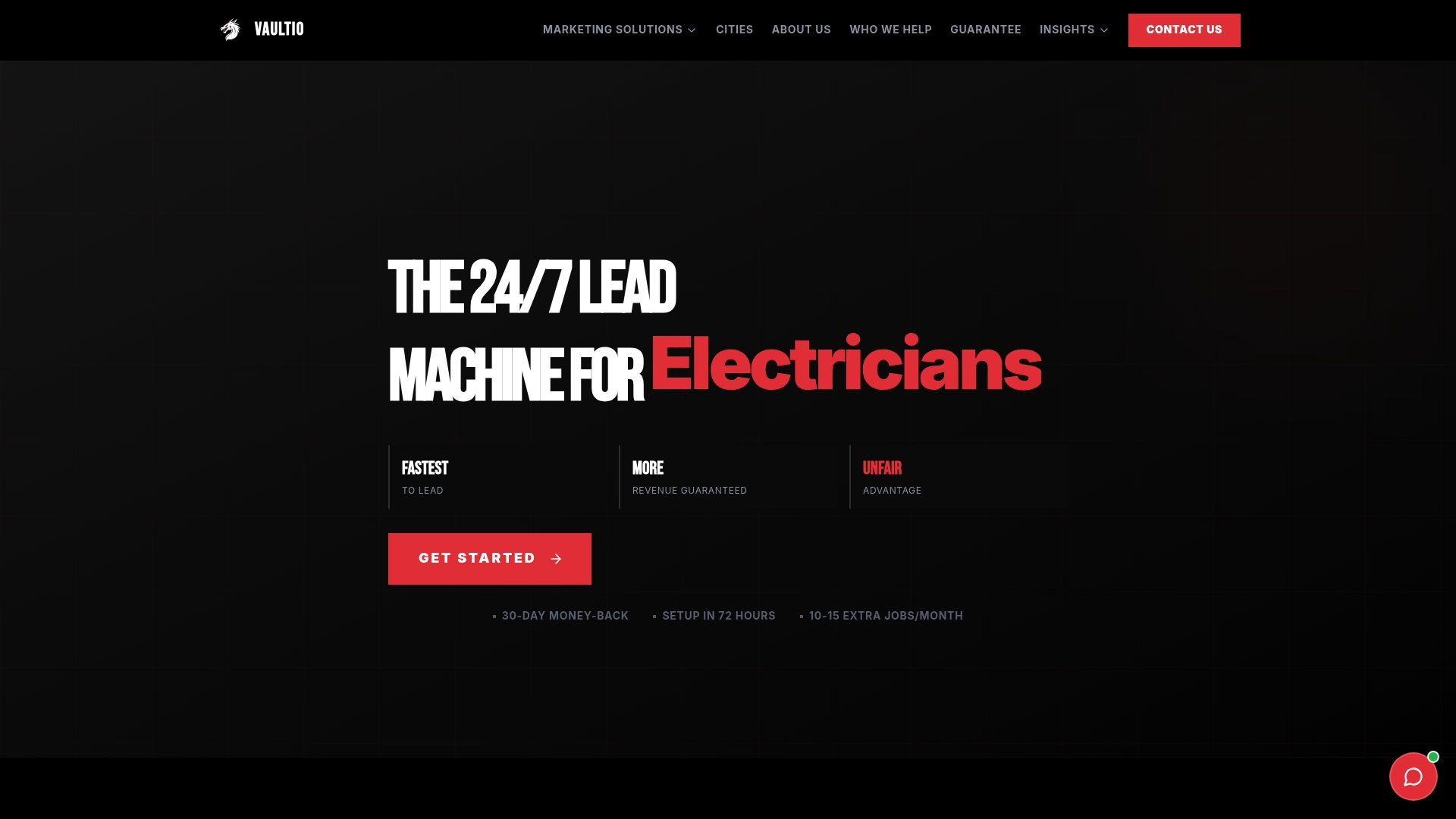
A conversion-optimized website from Vaultio places case studies, reviews, and commitment reducers exactly where the placement research says they belong, not wherever there happened to be empty space in a template. Paired with AI-powered lead response that engages every inquiry within seconds, and paid campaigns through Local Service Ads where landing page trust directly lowers your cost per lead, the whole system works together instead of as disconnected pieces.
- —Faster lead response than a human team can consistently deliver alone
- —Higher form completion from pages built around tested trust-signal placement
- —Measurable booked-job increases, not just traffic or click metrics
- —A 30-day money-back guarantee if the system doesn't perform
If you're a home service contractor in California ready to see what a properly built lead-capture page can do for your booked jobs, check out Vaultio's Santa Barbara marketing services and get a straight answer on what's currently costing you leads.
Frequently Asked Questions
What is the role of trust signals in lead capture? Trust signals lower a prospect's perceived risk at the moment they're deciding whether to submit a form, which directly increases completion rates, demo requests, and lead quality in B2B funnels.
How do trust signals differ from general branding? Branding communicates identity and positioning. A trust signal is specific and verifiable, like a named client result or a live review count, and it works because a buyer can check it rather than just believe it.
Which trust signal has the biggest impact on B2B conversion rates? Video testimonials and case studies with concrete metrics tend to outperform badges, logos, or generic claims because they're hardest to fake and easiest for a skeptical buyer to verify.
Where should trust signals go on a lead capture form? Directly beside the CTA and next to any form field that causes hesitation, like phone number or email, works better than placing signals in a footer or a separate page section.
How long should a trust-signal A/B test run for B2B? Most B2B tests need 14 to 30 days to account for longer sales cycles and lower traffic volume, with the exact window matched to how long your typical buyer takes to convert.
Sources
- —The importance of social proof as a trust signal — Wharton Online Insights
- —Trust signals: what they are and why they're changing — Trustpilot
- —5 trust signals every website needs to convert more visitors — WSI / Leap Digital
- —Trust signals that actually move conversion — placement, specificity, and timing — Levri
Recommended
Ready to Implement This?
We'll build your complete lead generation system in 72 hours. No contracts. 30-day money-back guarantee.