Marketing Budget for Contractors: Allocation & Calculator
# Marketing Budget for Contractors: Allocation & Calculator
Copy this allocation and start today: spend 30% on your website and SEO, 25% on Google Local Services Ads, 20% on Google Search ads, 10% on reputation and reviews, 10% on paid social (Meta), and 5% on tracking tools and testing.
Before you move a dollar, run three sanity checks:
- —Is your CAC affordable? Your customer acquisition cost must stay well below your average gross profit per job. If a job nets $2,000 and you're spending $1,800 to land it, the math doesn't work.
- —Do you have tracking in place? Call tracking, form attribution, and a simple CRM are non-negotiable before you scale any paid channel.
- —Is your website converting? A site that loads slowly or buries your phone number is a money pit. Fix conversion before you pour more traffic in.
These three checks determine whether your marketing budget contractors invest in will compound or evaporate.
*
Key Takeaways
Contractors who set a stage-based marketing budget, track CAC against gross profit per job, and reallocate quarterly by channel ROI consistently outperform those who spend by gut feel.
| Point | Details |
|---|---|
| Stage-based budget bands | Spend 5–8% of revenue to maintain, 8–12% to grow, and 10–15% as a new business buying visibility. |
| CAC must beat gross profit | Your customer acquisition cost must stay below your gross profit per job — $1,600 CAC on a $3,000 job leaves thin margin. |
| Own your assets first | Prioritize website, reviews, and SEO before scaling paid ads; owned assets lower CPL over time. |
| LSAs for fastest ROI | Google Local Services Ads average around $53 per lead and deliver the fastest path to booked jobs. |
| Vaultio for done-for-you execution | Vaultio manages LSAs, SEO, web design, and AI lead response so contractors capture every lead without managing the system themselves. |
*
Table of Contents
- —How Do You Calculate a Marketing Budget as a Contractor?
- —Where Should Contractors Spend Their Marketing Dollars?
- —A Simple Marketing Budget Calculator You Can Copy
- —How Should You Prioritize Channels by Stage and Season?
- —Which Metrics Tell You If Your Marketing Is Actually Working?
- —How Do You Stretch a Tight Marketing Budget?
- —What's Actually Working for Contractors Right Now
- —Vaultio Puts Your Budget to Work, Not to Waste
- —Sources
How Do You Calculate a Marketing Budget as a Contractor?
Three methods work in practice. Pick the one that matches where your business is right now.
1. The Percent-of-Revenue Method
This is the fastest starting point. Take your projected annual revenue and multiply by your stage-based rate. Contractor-specific benchmarks cluster around 5–8% for established companies maintaining market share, 8–12% for businesses in active growth mode, and 10–15% for newer operations that need to buy visibility fast.
Formula: Annual Marketing Budget = Annual Revenue × Target Rate
Use this method when you have at least one year of revenue history and a stable close rate. It's simple, defensible, and easy to adjust quarterly.
2. The Goal/CPA-Driven Method
Work backward from the revenue you want to add. This approach forces you to define targets before you spend anything.
Step-by-step:
- 1.Set your target new-customer revenue: e.g., $150,000 in new jobs this year.
- 2.Divide by average job value: $150,000 ÷ $3,000 = 50 new jobs needed.
- 3.Apply your close rate: if you close 30% of leads, you need 50 ÷ 0.30 = 167 leads.
- 4.Set your target Cost Per Lead (CPL): based on channel benchmarks (LSA leads run around $53; Google Search clicks near $7.85 per click with typical conversion rates), estimate a blended CPL of $80.
- 5.Calculate required ad spend: 167 leads × $80 CPL = $13,360 in paid media.
- 6.Add website, SEO, and tools (roughly 40–50% on top): total budget lands near $18,000–$20,000 for the year.
Key formulas:
- —CPL = Ad Spend ÷ Leads Generated
- —CAC = Total Marketing Spend ÷ New Customers Won
- —ROI on Gross Profit = (Gross Profit from New Jobs − Marketing Spend) ÷ Marketing Spend
3. The Per-Job Allocation Method
Service-heavy contractors with predictable job types often find it easier to assign a marketing cost per job type rather than a blanket percentage. Decide what you're willing to pay to acquire each job category, then multiply by your volume target.
Example: You want 20 HVAC installs at a $250 target CAC = $5,000 in acquisition spend for that service line. Add 15 plumbing calls at $80 CAC = $1,200. Total acquisition budget: $6,200, before overhead and tools.
This method pairs well with the overhead allocation approach contractors already use for job costing: once you know your overhead rate (annual overhead ÷ annual field labor hours), you can fold marketing CAC into your true cost-per-job and protect margins.
*
Where Should Contractors Spend Their Marketing Dollars?
Channel allocation is where most contractors either win or waste money. The right mix depends on your stage, but the trade-offs below apply at every level.
Website and SEO (25–35% of budget)
Your website is the only marketing asset you fully own. SEO compounds over time: a well-ranked page keeps generating leads without paying per click. The downside is patience. Expect 3–6 months before organic traffic moves meaningfully. Pair it with local SEO tactics targeting service-area keywords to accelerate results.
- —Best for: Long-term lead cost reduction, brand authority, owned traffic
- —Expected CPL shape: High upfront, drops sharply after month 6
- —Watch out for: Slow sites, thin content, and no local schema markup
Google Local Services Ads (20–30% of budget)
LSAs surface your business at the very top of Google to searchers who are ready to hire. The pay-per-lead model means you only pay when someone contacts you directly. LSA leads average around $53, making them among the most cost-efficient paid channels for home-service trades. The Google Guarantee badge also lifts trust instantly.
- —Best for: Immediate booked jobs, high-intent local searches
- —Expected CPL: ~$53 average; varies by trade and market
- —Watch out for: Disputed leads that drain budget if not managed
Google Search Ads (15–25% of budget)
Search ads fill the gap while SEO matures. You control keywords, bids, and geography precisely. Google Search CPCs run near $7.85 for contractor categories, so a $2,000/month budget buys roughly 250 clicks. Pair with conversion-focused landing pages to push that rate higher.
- —Best for: Immediate demand capture, testing new service areas
- —Expected CPL: $60–$150 depending on trade and geography
- —Watch out for: Broad match keywords that burn budget on irrelevant searches
Reputation and Reviews (8–12% of budget)
Reviews are the silent closer. A contractor with 200 five-star reviews wins the job before the phone rings. Budget here covers review generation software, response management, and any reputation repair. This is one of the highest-ROI line items because it amplifies every other channel.
- —Best for: Conversion rate improvement, LSA ranking, trust signals
- —Expected CPL: Indirect; lifts conversion across all channels
- —Watch out for: Ignoring negative reviews, which compounds damage
Meta (Facebook/Instagram) Ads (8–12% of budget)
Meta ads work best for awareness and retargeting, not immediate job capture. Use them to stay in front of past website visitors and target homeowners in your service area by income and home-ownership status. Detailed Facebook targeting strategies can sharpen your audience and lower cost per qualified lead.
- —Best for: Retargeting, seasonal promotions, brand awareness
- —Expected CPL: $40–$120 for home services; varies by creative quality
- —Watch out for: Leads that are lower intent than search-driven leads
Referral and Repeat Marketing (5–10% of budget)
Email and SMS to past customers, referral incentive programs, and local partnerships cost almost nothing to run but produce some of the highest-quality leads. Email marketing to an existing customer list is particularly high-ROI because the trust is already built.
- —Best for: Lowest CAC leads, highest close rates, LTV maximization
- —Expected CPL: Near zero for email/SMS; small incentive cost for referrals
Tracking, Tools, and Testing (5% of budget)
Never skip this. Without attribution, you're flying blind on which channels actually book jobs.
*
Sample allocation by business stage
| Channel | New Business | Growth Stage | Established |
|---|---|---|---|
| Website & SEO | 20% | 30% | 35% |
| Google LSA | 30% | 25% | 20% |
| Google Search Ads | 25% | 20% | 15% |
| Reputation & Reviews | 10% | 10% | 10% |
| Meta Ads | 10% | 8% | 8% |
| Referral & Repeat | 0% | 5% | 8% |
| Tracking & Testing | 5% | 2% | 4% |
Channel effectiveness data from Statista's cross-industry research consistently shows search and email as top performers, which aligns with prioritizing LSA and owned-channel investment at every stage.
*
A Simple Marketing Budget Calculator You Can Copy
Use this worked example as a spreadsheet template. Paste the inputs into Excel or Google Sheets, swap in your numbers, and the outputs update automatically. The SCORE annual marketing budget template offers a complementary worksheet for turning these percentages into monthly line items.
Calculator inputs
| Input | Example Value |
|---|---|
| Annual gross revenue | $500,000 |
| Target growth rate | 15% |
| Average job value | $3,000 |
| Close rate (leads to jobs) | 30% |
| Target CAC | $200 |
| Current website conversion rate | 8% |
Calculation steps
- 1.Annual budget: $500,000 × 8% = $40,000/year
- 2.Monthly budget: $40,000 ÷ 12 = $3,333/month
- 3.New jobs needed: ($500,000 × 15% growth) ÷ $3,000 = 25 new jobs
- 4.Leads needed: 25 ÷ 0.30 = 84 leads/year (7 per month)
- 5.Implied CPL: $40,000 ÷ 84 = $476 blended CPL (check: is this below your gross profit per job?)
- 6.CAC check: $40,000 ÷ 25 = $1,600 CAC vs. $3,000 average job value. Margin is tight; either raise the close rate or reduce CPL through LSA and SEO.
Monthly channel dollar outputs
Treat this budget as a living document. Just as Miter recommends for construction project budgets, tie your marketing spend to commitments and update your Estimate at Completion monthly as actual CPL and CAC data comes in. When a channel underperforms for two consecutive months, reallocate its dollars to what's working.
Pro Tip: Build a "remaining budget" column in your spreadsheet that auto-updates as you assign dollars to each channel, the same way project-finance tools track budget allocation against scheduled work items. It prevents overspend and makes reallocation decisions obvious at a glance.
*
How Should You Prioritize Channels by Stage and Season?
Stage determines what you fund first. Season determines when you push harder.

Stage-based decision rules
Foundation stage (Year 1 or new market):
- —Build the website first. No paid channel performs without a fast, conversion-ready site.
- —Set up call tracking and a basic CRM before spending on ads.
- —Claim and optimize your Google Business Profile and start collecting reviews.
- —Launch LSAs as your first paid channel. Fastest path to booked jobs.
Growth stage (Scaling to $500k–$1M revenue):
- —Add Google Search ads with tightly targeted service-area keywords.
- —Build dedicated landing pages for each service type.
- —Start an SEO retainer. Results take time, but the compounding effect is real.
- —Introduce Meta retargeting for past website visitors.
Scale stage ($1M+ revenue, established market position):
- —Shift budget weight toward SEO and owned assets. Lower your long-term CPL.
- —Launch email and SMS campaigns to your existing customer database. These are your highest-margin leads.
- —Invest in local partnerships and referral programs.
- —Use a dedicated testing budget (5%) to experiment with new channels without risking core spend.
Seasonality adjustments
Front-load your budget 4–6 weeks before your busy season. If your peak is April through September, increase paid search and LSA spend starting in March. This captures early-season searchers before competitors ramp up bids.
During slow months, resist the urge to cut everything. Slow-season marketing tests (new landing pages, email sequences, referral campaigns) cost less to run and give you data before the busy season returns.
*
Which Metrics Tell You If Your Marketing Is Actually Working?
Track these numbers. Nothing else matters until you have clean data on all of them.
Core metrics:
- —CPL (Cost Per Lead): Total channel spend ÷ leads from that channel. Track per channel, not blended.
- —CAC (Customer Acquisition Cost): Total marketing spend ÷ new customers won. Your CAC must stay below gross profit per job.
- —Close rate: Jobs booked ÷ leads received. A low close rate is a sales problem, not a marketing problem.
- —Average job value: Total revenue ÷ jobs completed. Rising job value means your marketing is attracting better customers.
- —Gross profit per job: Revenue per job minus direct labor and materials. This is the number your CAC must beat.
- —LTV (Lifetime Value): Average revenue per customer over their full relationship with you. A high LTV justifies a higher CAC.
- —ROI on gross profit: (Gross profit from new jobs − marketing spend) ÷ marketing spend. Aim for at least 3:1.
Reporting cadence:
- —Weekly: Check lead volume by channel. Spot drops fast and pause underperforming ads before they drain budget.
- —Monthly: Calculate CAC and CPL per channel. Compare to your target. Reallocate if a channel is 20%+ over target CAC for two consecutive months.
- —Quarterly: Full strategic review. Shift budget between channels based on three months of real data. Adjust your annual budget rate if revenue has changed significantly.
Dashboard essentials (one page): Total leads this month, CPL by channel, CAC, close rate, average job value, and total marketing spend vs. budget. That's it. Six numbers tell you everything.
Pro Tip: Use a dedicated phone number for each marketing channel (CallRail or a similar call-tracking tool). This gives you clean attribution without relying on customers to remember where they found you. Pair it with UTM parameters on every digital campaign for form-fill attribution. Privacy-aware tracking setup matters too: understand your consent and cookie categories before deploying tracking scripts, especially if you serve customers across multiple states.
*
How Do You Stretch a Tight Marketing Budget?
Small budget doesn't mean small results. It means you have to be precise.
- —Fix your landing pages first. A conversion-optimized landing page matched to a specific ad can produce 2–3x more qualified leads from the same ad spend. Generic homepages waste clicks. Build one page per service, per market.
- —Speed up your site. A one-second delay in page load time measurably drops conversion rates. Use Google PageSpeed Insights to find the biggest offenders. Most fixes are free.
- —Put reviews near your call-to-action. Moving a star rating or a short testimonial next to your "Get a Free Quote" button lifts form fills. No additional spend required.
- —Email and SMS your past customers. This is the cheapest lead you'll ever generate. A simple seasonal offer sent to 200 past customers costs almost nothing and can book 3–5 jobs directly. Email marketing best practices apply here: short subject lines, one clear offer, one call-to-action.
- —Run a referral incentive. Offer a $50–$100 gift card for every referred job that books. Your close rate on referrals is typically 2–3x higher than cold leads, so the economics work even at a higher incentive.
- —Optimize your LSA hours. Run LSAs only during hours when you can actually answer the phone. Paying for leads you can't respond to within minutes is money wasted. Fast lead response is the single biggest factor in whether a paid lead converts to a booked job.
- —Job-site signage. A yard sign in a neighborhood where you're already working costs $20 and generates neighbor inquiries at zero CPL. Underused by most contractors.
- —Local partnerships. Real estate agents, property managers, and insurance adjusters are referral goldmines. One relationship can send 10–20 jobs a year at no ad cost.
Pro Tip: Pair every paid ad with a dedicated landing page that mirrors the ad's exact headline and offer. Generic homepages kill conversion. Specific pages built around a single service and a single call-to-action consistently outperform, and the right keyword-to-page pairing is what separates contractors who get leads from those who just get clicks.
*
What's Actually Working for Contractors Right Now
The contractors who are winning right now share one pattern: they treat their marketing budget like a job-cost line item, not a discretionary expense. They know their CAC. They know their close rate. And they reallocate ruthlessly when the numbers shift.
What wastes money consistently? Broad-match Google Search campaigns with no negative keyword lists. Meta ads running to a homepage instead of a landing page. SEO retainers with agencies that produce blog posts but never touch technical site health or local citations. And the biggest one: paying for leads that nobody follows up with in under five minutes.
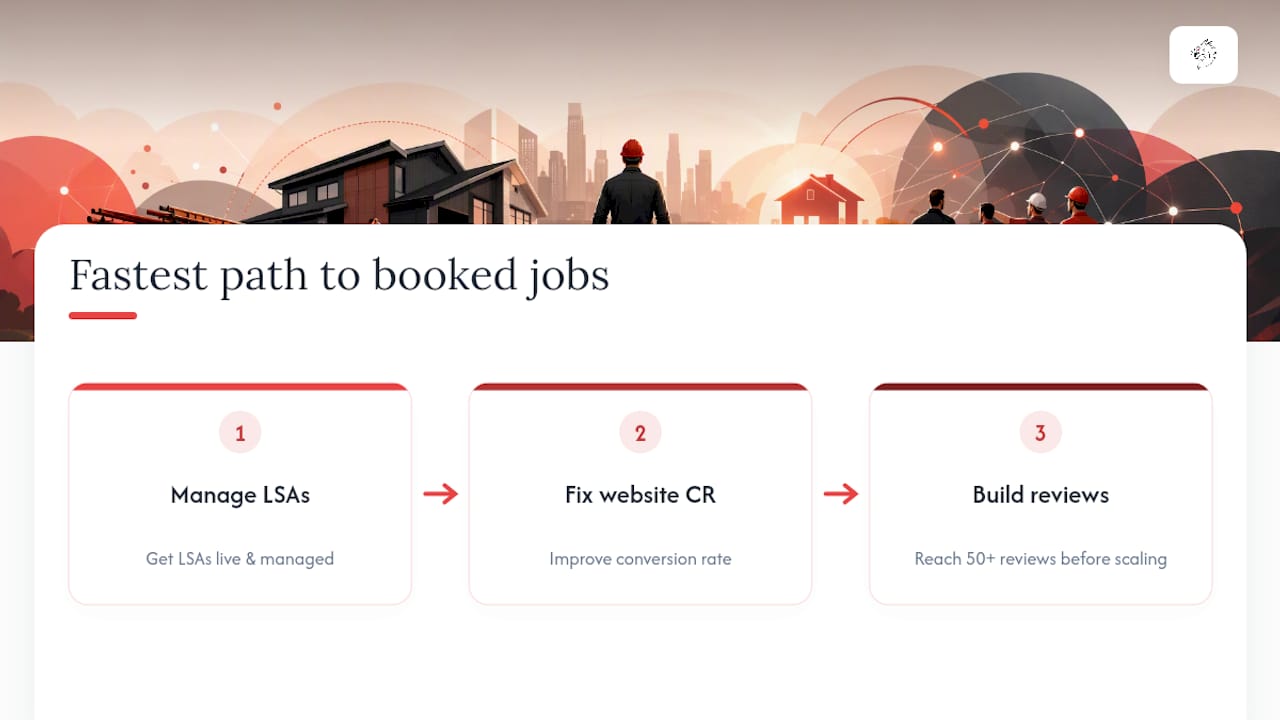
The fastest path to booked jobs, based on what works across home-service trades, is this sequence: get your LSAs live and managed tightly, fix your website's conversion rate, and build your review count to 50+ before you scale anything else. That foundation makes every other dollar work harder.
The Moneyball Marketing framework puts it well: separate your budget into acquisition (Fielding), conversion assets (Bases), and database monetization (Home Runs). Most contractors overspend on Fielding and skip Bases entirely, then wonder why their CPL is high. The fix isn't more ad spend. It's building the assets that convert the traffic you're already paying for.
*
Vaultio Puts Your Budget to Work, Not to Waste
Contractors who follow this guide still face one hard problem: executing it takes time, tools, and expertise most owner-operators don't have sitting around. That's exactly where Vaultio comes in.
Vaultio manages your Google Local Services Ads, Google Search campaigns, local SEO, and conversion-focused web design as a done-for-you system built specifically for home-service contractors. Every new lead gets engaged within seconds by Vaultio's AI lead response, so you capture the jobs your competitors miss because they were slow to pick up the phone. The result is a predictable pipeline of 10–15 extra booked jobs per month, with full visibility into CPL, CAC, and ROI so you always know what's working.
Backed by a 30-day money-back guarantee. No long-term lock-in. Book a free budget audit with Vaultio and find out exactly where your current spend is leaking and what it would take to own your local market.
*
Sources
- —Most effective online marketing channels according to US companies — Statista
- —Contractor Marketing Budget: How Much to Spend in 2026 - Contractor Guide Pro
- —Annual marketing budget template — SCORE
- —Allot Budget to Scheduled Work Items — Linarc Help
- —How to allocate overhead in a construction company — Edge Strat Finance
- —How to build a construction budget: A guide for contractors — Miter
Recommended
Ready to Implement This?
We'll build your complete lead generation system in 72 hours. No contracts. 30-day money-back guarantee.